
Welcome to Bryanston Square Garden
Bryanston Square is located in Marylebone, a residential neighbourhood within the City of Westminster. In the Square, Georgian townhomes surround a garden, which is maintained by the Bryanston Square Trust for the exclusive enjoyment of private residents of Bryanston Square. The Garden is not accessible to the general public.
COUNTING
TREES
BUILDINGS
UNITS
Historic Bryanston Square
Bryanston Square is an early 19th-century garden square built on the Portman Estate. Montagu Square and Bryanston Square were the chief compositions of the estate between Gloucester Place and Edgware Road. The garden was provided for residents of surrounding houses. It retains notable London plane trees, mainly around the perimeter but also on the central lawn, and the path layout is recognisably descended from the original symmetrically undulating perimeter.
Construction of houses on Bryanston Square commenced in 1810 (completed 1821), a decade later than Montagu Square to the east (completed 1813) and several decades later than Portman Square (completed 1784). The three squares and surounding streets were developed on land leased from the Portman family, whose London land holdings covered a major part of today’s district of St. Marylebone. The developments followed an overall layout of squares, mews and streets planned by the Estate. The Square was named after Bryanston, near Blandford, Dorset, the seat of the Portman family.
Bryanston Square is the important central element in a fine architectural axis extending from Marble Arch in the south to St. Mary’s Church/Wyndham Place, in the north (St. Mary’s was designed by Robert Smirke, architect of the British Museum). Great Cumberland Place was laid out and developed between 1774 and 1795. Bryanston Square followed (1810-1821) and St.Mary’s was completed in 1824 to close the north vista. Marble Arch, to the south, was a bonus when, in 1851, it was moved to its current site from in front of Buckingham Palace. The Arch nicely closed the vista south and the architectural axis was complete. (Until 1847 Marble Arch stood in an open forecourt of the then three-sided Buckingham Palace. It was displaced when the forecourt was enclosed by construction of the palace front now facing the Mall.)
Although mocked by Charles Knight in 1844 as “twin deformities…long narrow strips of ground, fenced in by two monotonous rows of flat houses”, Bryanston and Montagu Squares were not, in fact, a pair. Bryanston Square is wider and plays a significant part in the surrounding townscape, given its alignment in the axis with Marble Arch to the south and Wyndham Place to the north. The east and west sides of Bryanston Square were built to a single grand design, relatively unusual for London garden squares of the period. Originally, each corner and the central sections of east and west sides were designed to mirror each other, with white, stuccoed housefronts complete with attached columns and pediments. James Thompson Parkinson, District Surveyor of Westminster, who also designed Montagu Square and other buildings in Marylebone, was the architect. David Porter was the developer/builder, though a Mr Harrison is also mentioned in records as a builder of “many houses in Bryanston Square”.
Notable former residents include the Duke of Brunswick and Earls Latham, Waldegrave and Shaftsbury. The Earl of Shrewsbury is recorded as purchasing a large house on the south-west corner (No. 48) and commissioning the builder George Ledwell Taylor to construct a theatre covering the whole of the premises behind the mansion. In 1837 Chopin gave a recital in No. 46, the home of John Broadwood, who was the most famous English maker of pianofortes in C19. In 1860, the painter Millais took a house at the George Street corner, where he painted “The Black Brunswicker”, using Charles Dickens’ daughter as a model for the female figure.
There are many literary associations. Thackeray’s “The Newcomes” is set in the square; Mr. March, a character in C.P. Snow’s novel “The Conscience of the Rich” lived in the square; Algernon Cecil wrote a memoir in 1945 entitled “A House in Bryanston Square”. In Rosamund Lehmann’s 1936 novel “The Weather in the Streets” the hero lives at No. 2. Eric Ambler, the thriller writer and playwright, lived at No. 14 until his death in 1998.
A plaque on No. 1 commemorates Mustapha Pasha Reshdiva, Turkish Ambassador in London, 1835-1839, who is renowned for his attempts to modernise the Ottoman Empire; Queen Victoria was entertained in the house.
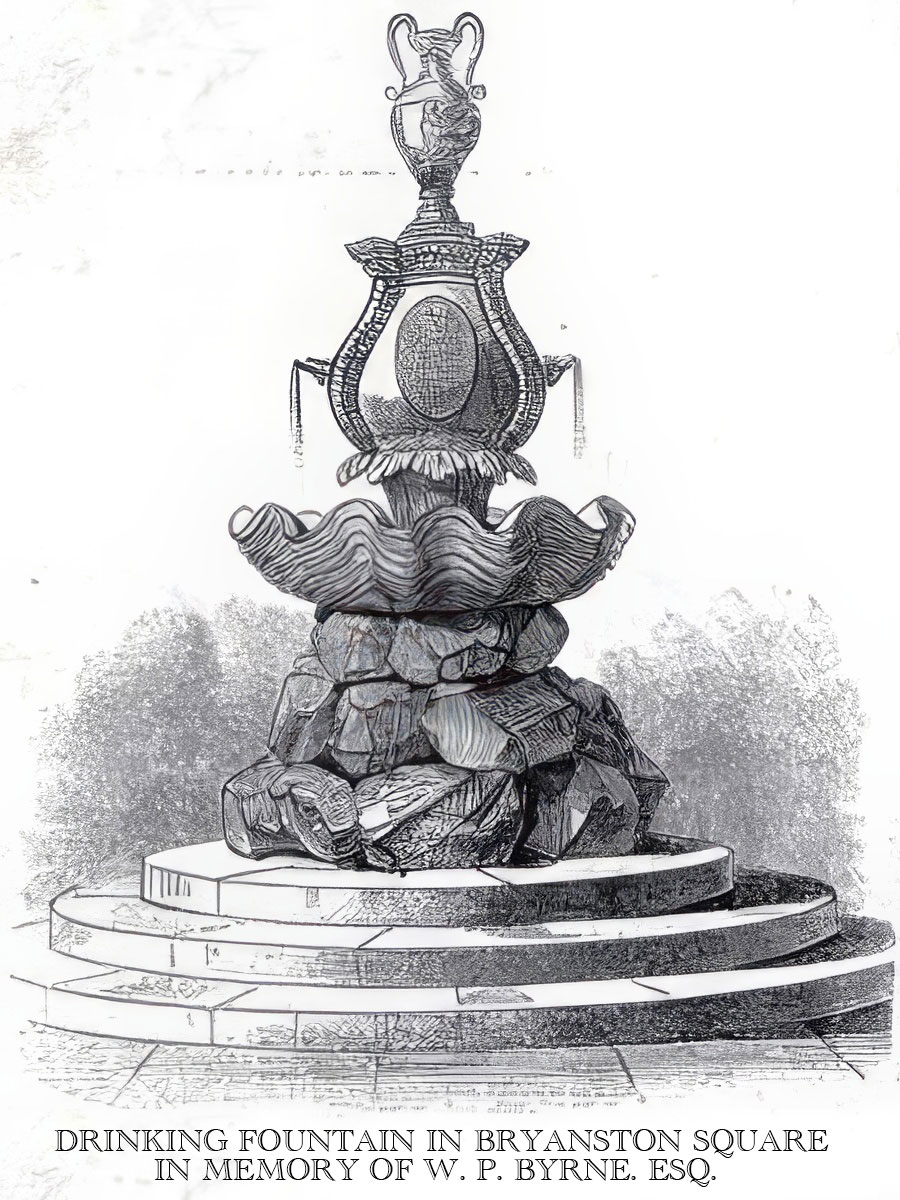
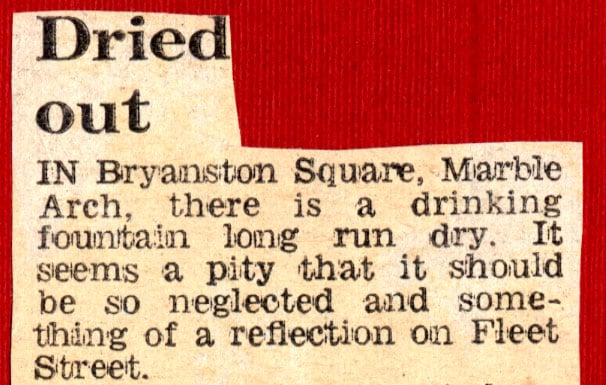
At the south end of the garden square stands a Grade II-listed memorial drinking fountain by William Pitt Byrne, erected in 1862/3. Pitt was the owner and editor of The Morning Post, which later merged with the Daily Telegraph in 1937. Made of painted stone, it consists of a heaped ‘rock’ rubble base to a shell basin from which rises the fountain proper consisting of an acanthus leaf plinth to a bombe-faced pedestal with angle consoles and a crowning urn finial. The drinking fountain was allowed to run dry at some point following its construction, as noted by the Evening Standard in 1974.
At the north end of the Garden stands a cast iron water pump in the form of a Doric column, also Grade II-listed, dating from the early C19th.
During WWI, convalescent hospitals were established at No 37 and at No 48, treating, in particular, patients from the Royal Flying Corps. The hospitals, established (separately) by Lady Tredegar and Lady Carnarvon, respectively, opened in 1916. King George V and Queen Mary visited the hospitals early in 1917.
During WWII, the St Marylebone Civil Defense Unit reported repeated incidents causing damage to buildings in and around Bryanston Square between September 1940 and September 1941. In WWII all property in the Square was requisitioned by the American Army and the garden became a parking lot for army vehicles. The First United States Army Group was headquartered in Bryanston Square as of 16 October 1943, followed by the American 12th Army Group, under the command of General Omar N. Bradley, at Nos 14-20 Bryanston Square. On 14 March 1944, the Headquarters at Nos 14-20 was attacked. In EAGLE XX: Twelfth Army Group, Brigadier General Charles A. Masson describes the event:
“One incident recalled was the last big German air raid when they set our head quarters on fire in March of ’44. I rushed around to try to save what I could of the plans, and, as I approached the entrance to my building. General Leven Allen stopped me and said, “Masson, you are just the man I want—you are in charge of the fire department and I don’t want the fire to get beyond No. 16 Bryanston Square.” Of course, this was General Bradley’s and General Allen’s office so it was my job to carry on. We had one small British pump and I called the British Fire Department twice for reinforcements and on the third call the voice on the other end said, “Look here, my good fellow, there are 350 fires in London tonight. We know where the important ones are and will get to you in due course. Good-night”; and the receiver clicked. Knowing I had had it and with the help of the one pump and stalwart work of many others with a stirrup pump, buckets, sand, etc. we were able to contain the fire and saved the General’s office.” (p 24)
Ultimately, the 2 centrepieces and north-east corner of the square were destroyed in WWII; the other 3 corner pavilions survive in a somewhat mutilated state. In July 1969 a 500-lb unexploded WWII bomb was found during excavations for the construction of the new Swiss Embassy and Consulate.
The Garden in Bryanston Square
The garden was laid out in 1810 and was provided for the residents of the surrounding houses. It continues to be administered by a Trust set up by an Act of Parliament of 1813, which has a statutory obligation to maintain the garden and its surrounding railings, levying a rate for the purpose on the occupants of Bryanston Square. In 1928 the garden was described as “a long narrow enclosure surrounded by a thick shrubbery” “laid out as lawns with some fine trees”.
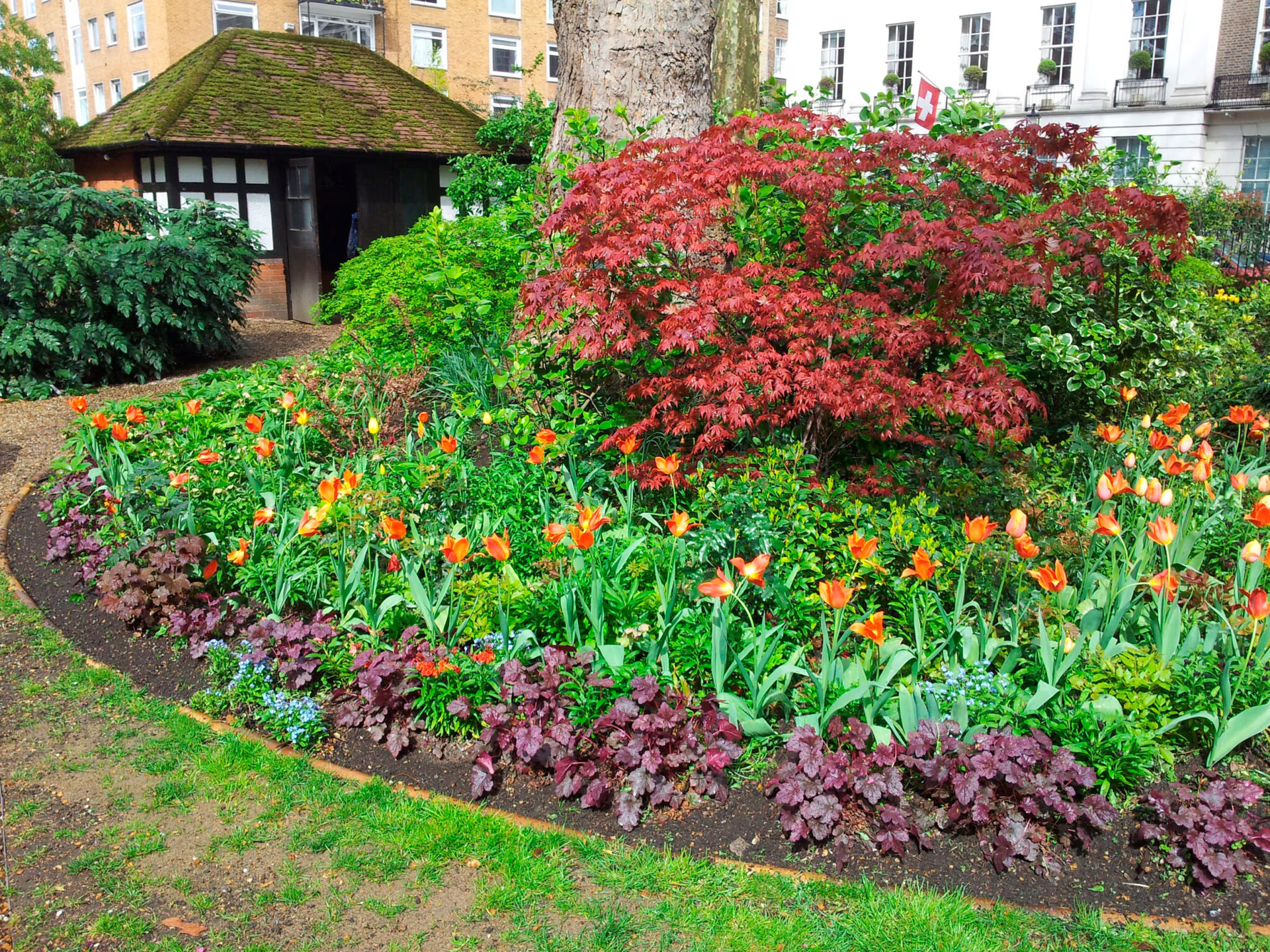
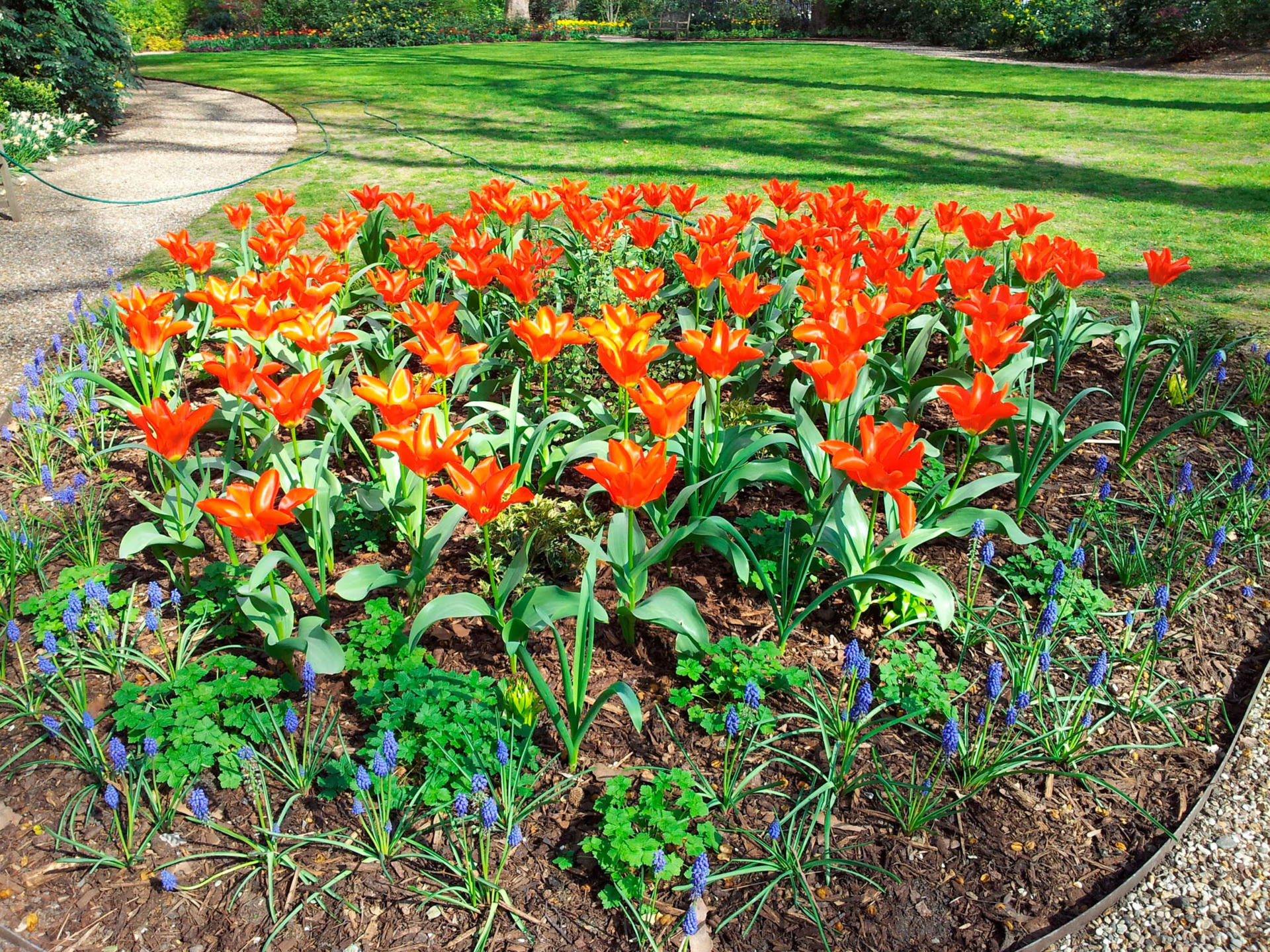
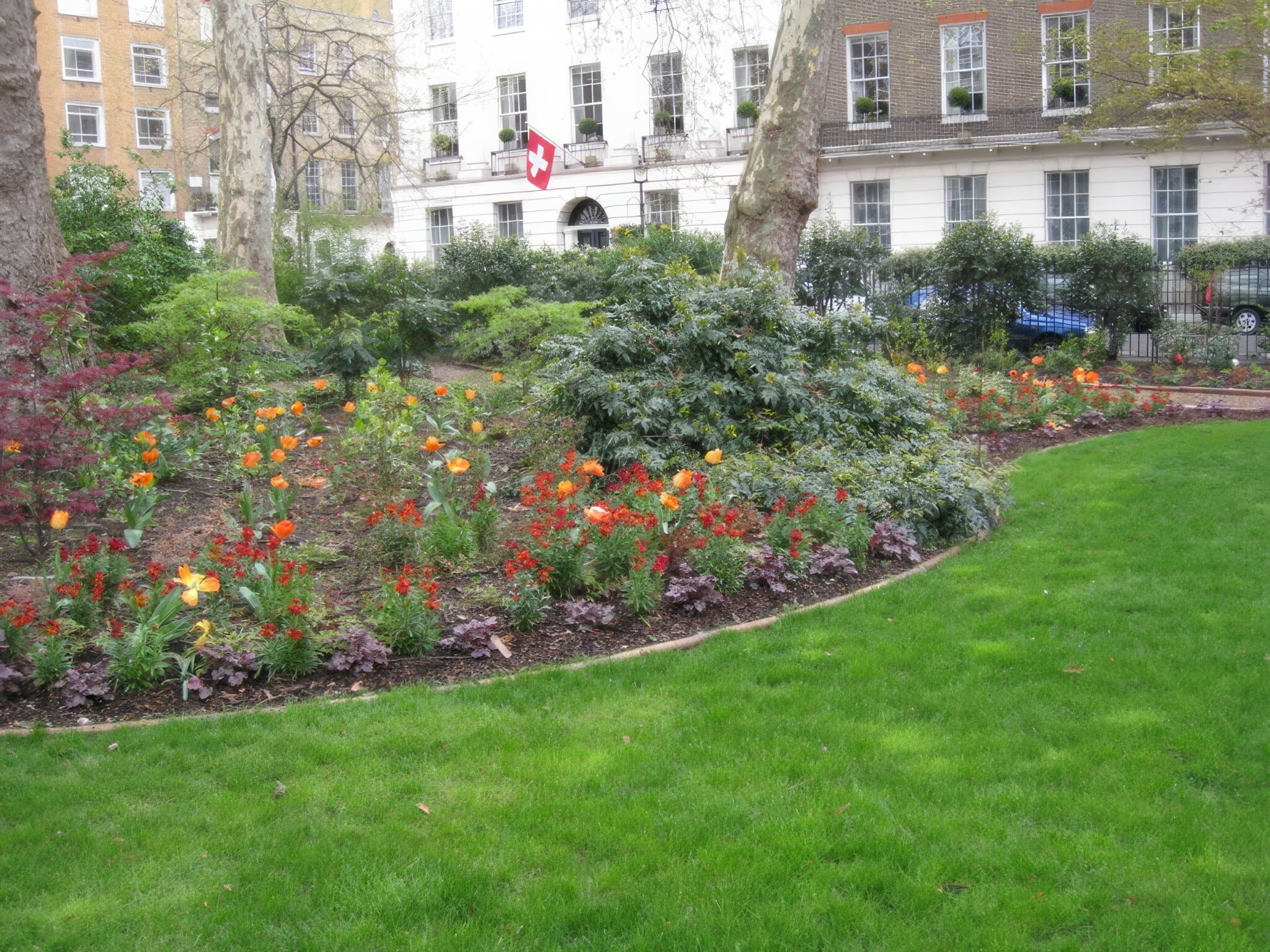
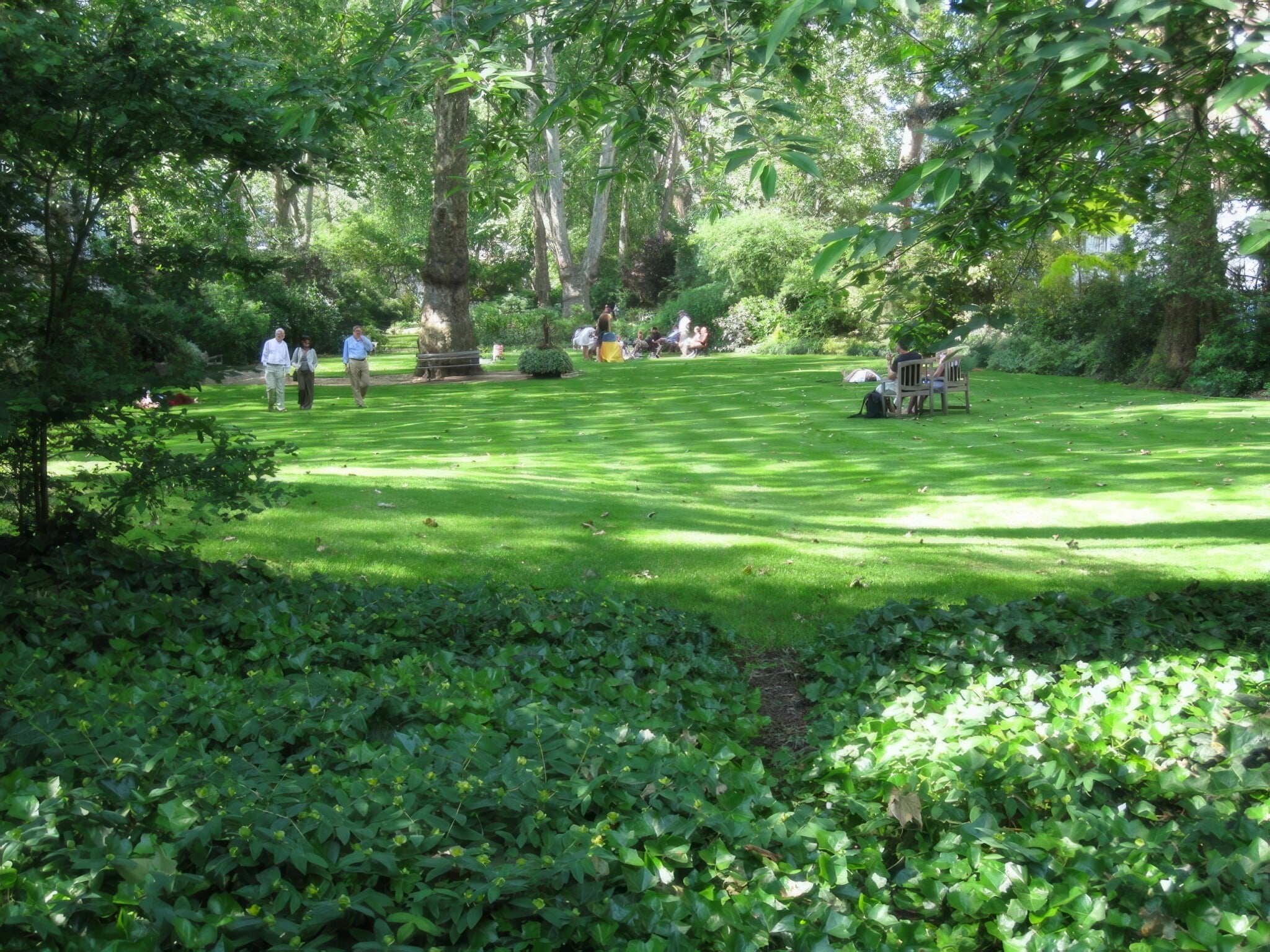
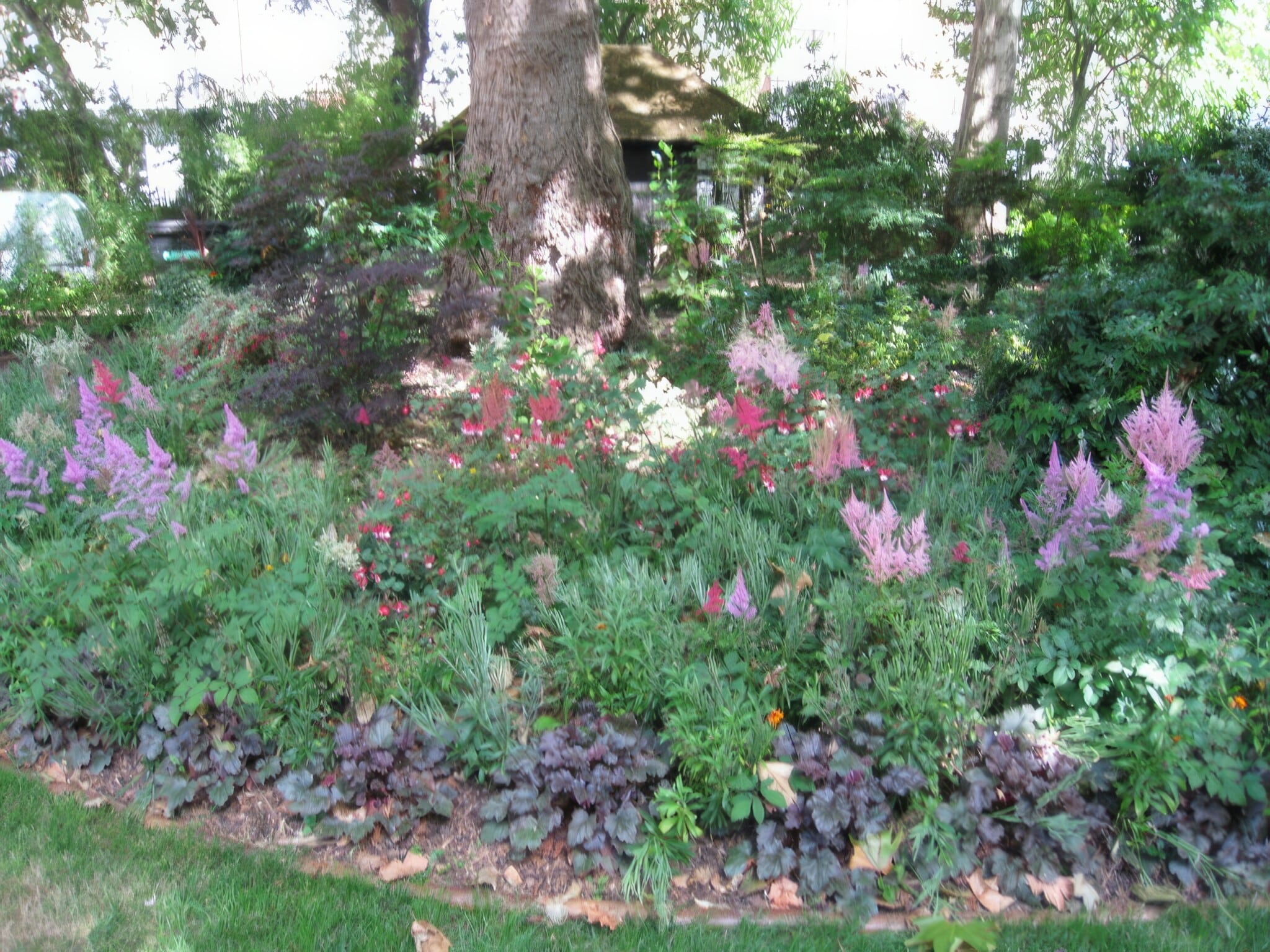
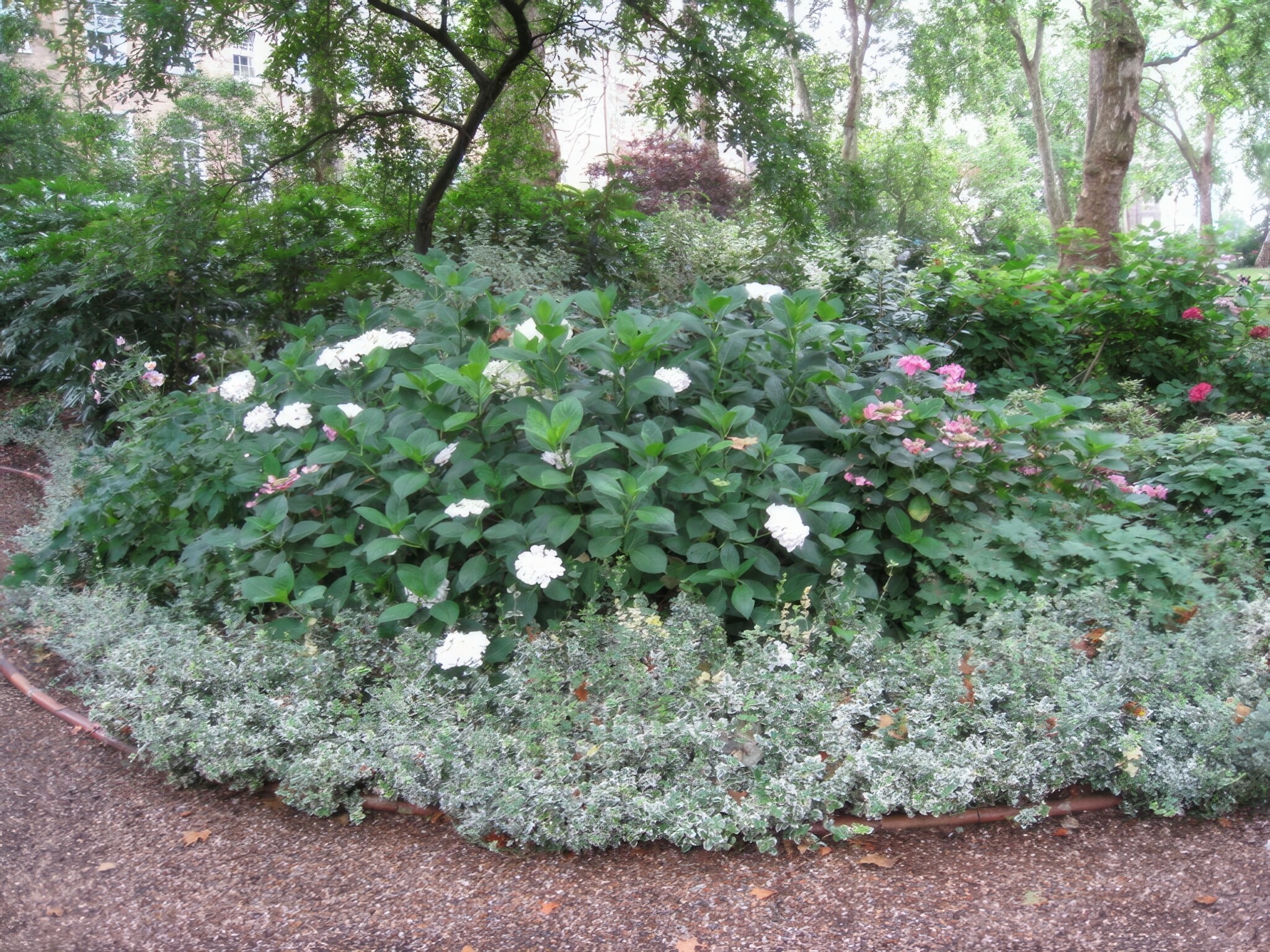
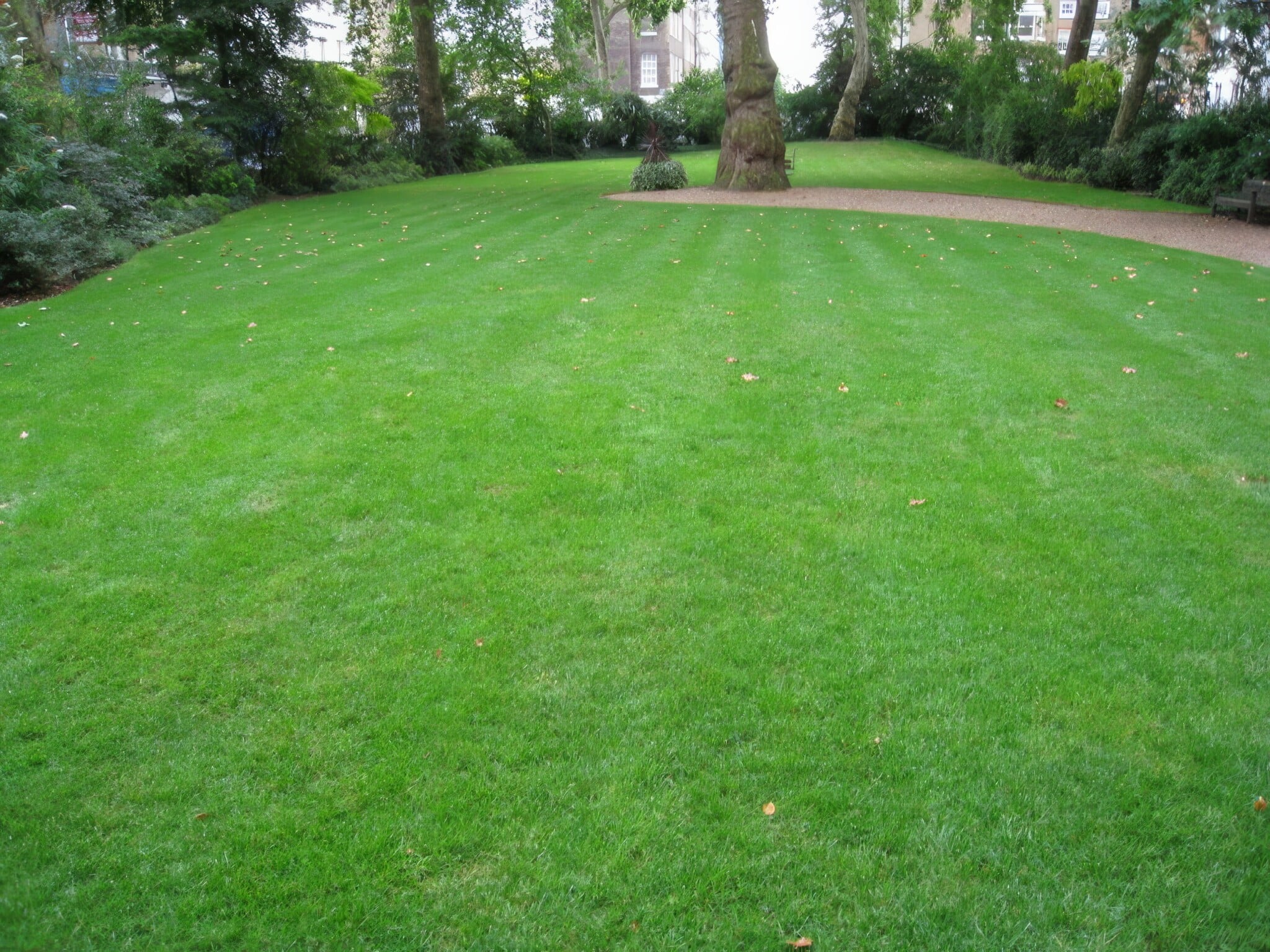
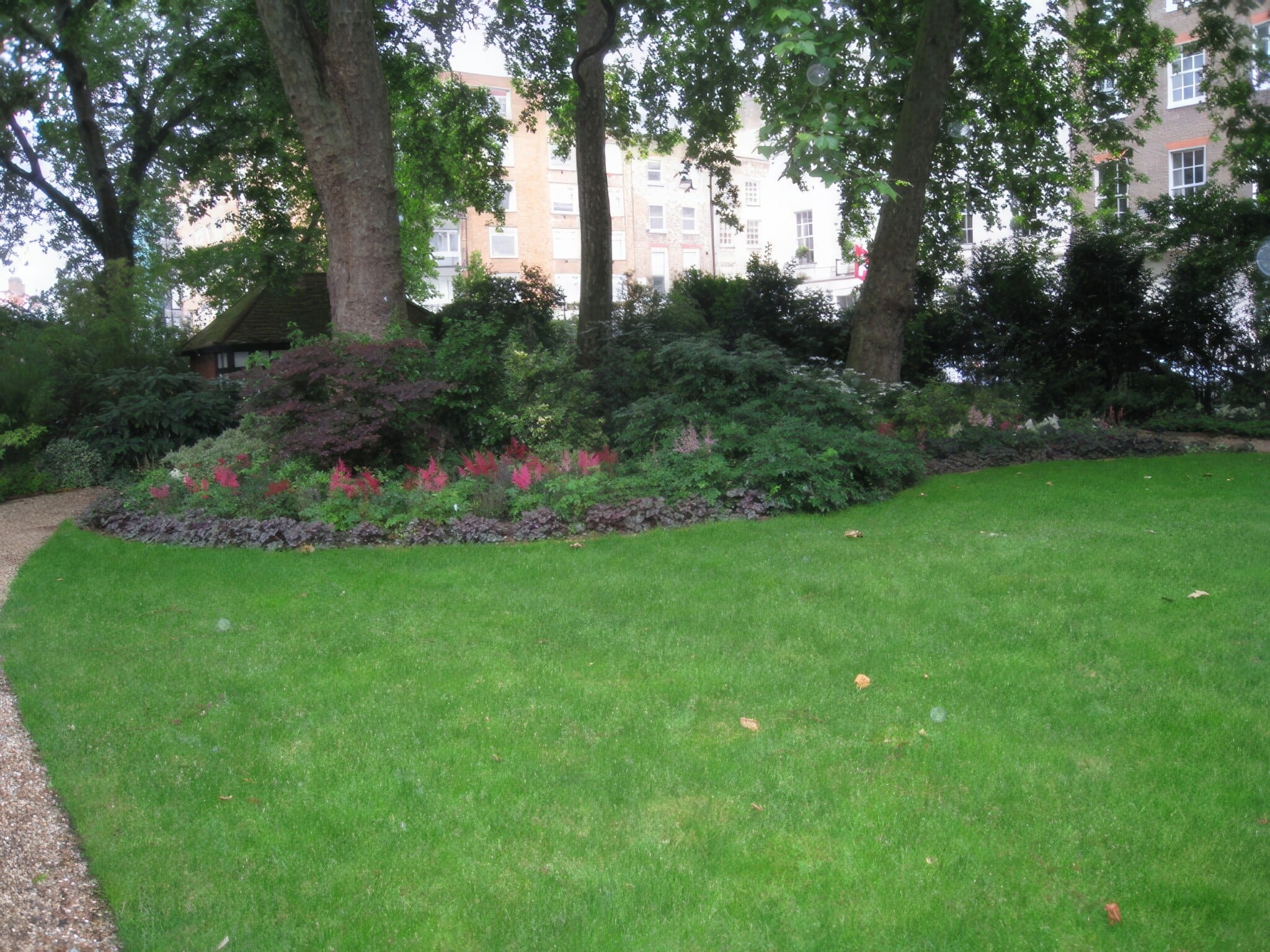
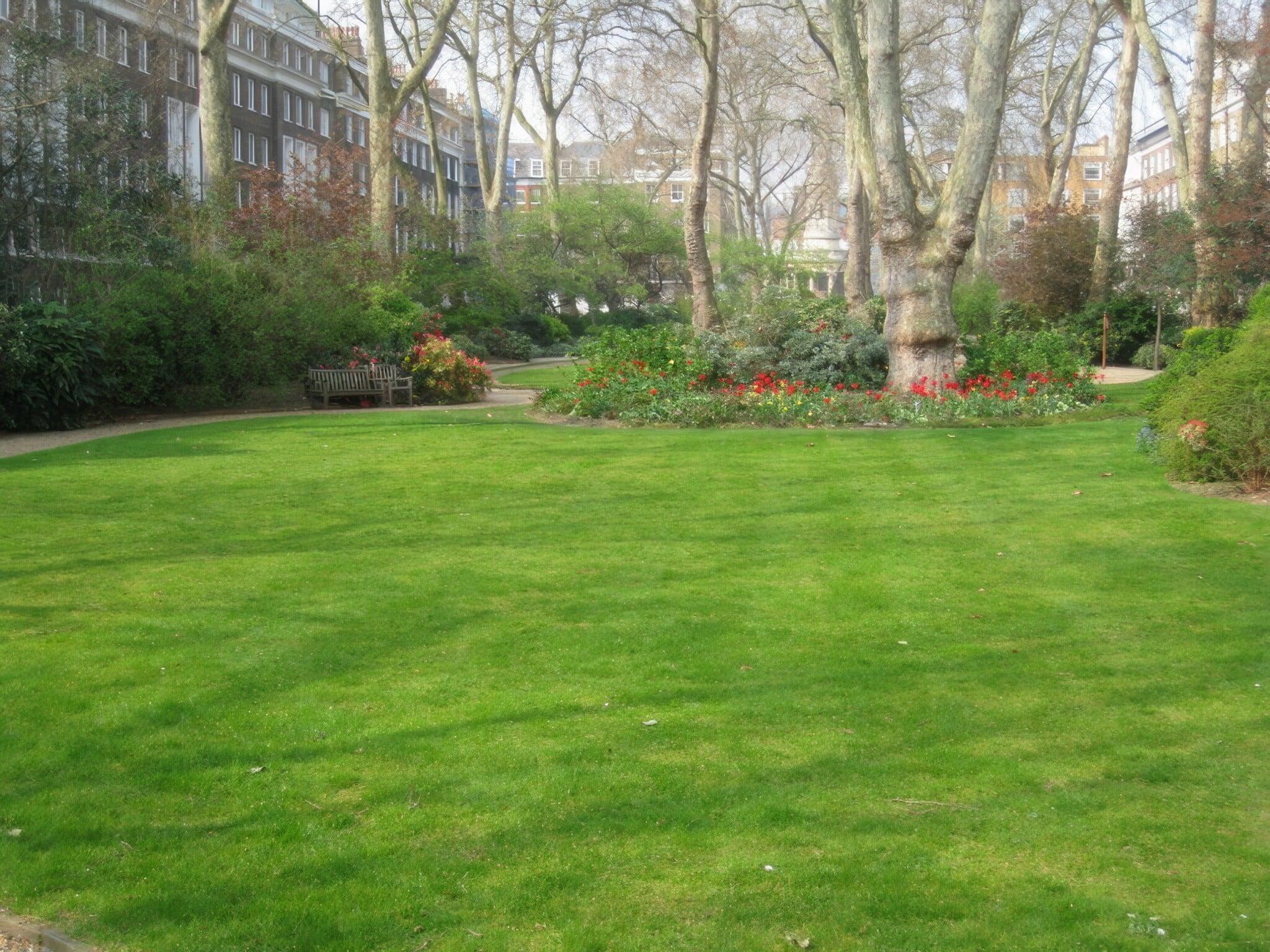
Today the garden retains notable London plane trees, mainly around the perimeter but also on the central lawn, as shown on the OS Map of 1870. Handsome and magnificent though they are, the planes’ shading canopy greatly limits plantinq today, especially colour planting in summer. Consequently, Bryanston Square is of necessity a mostly green garden. Only in spring is there a lot of colour from spring bulbs, flowering trees, camellias, azaleas and rhododendrons. Apart from the London planes, other trees include cherry, malus, lilac, laburnum, false acacia and Japanese maple.
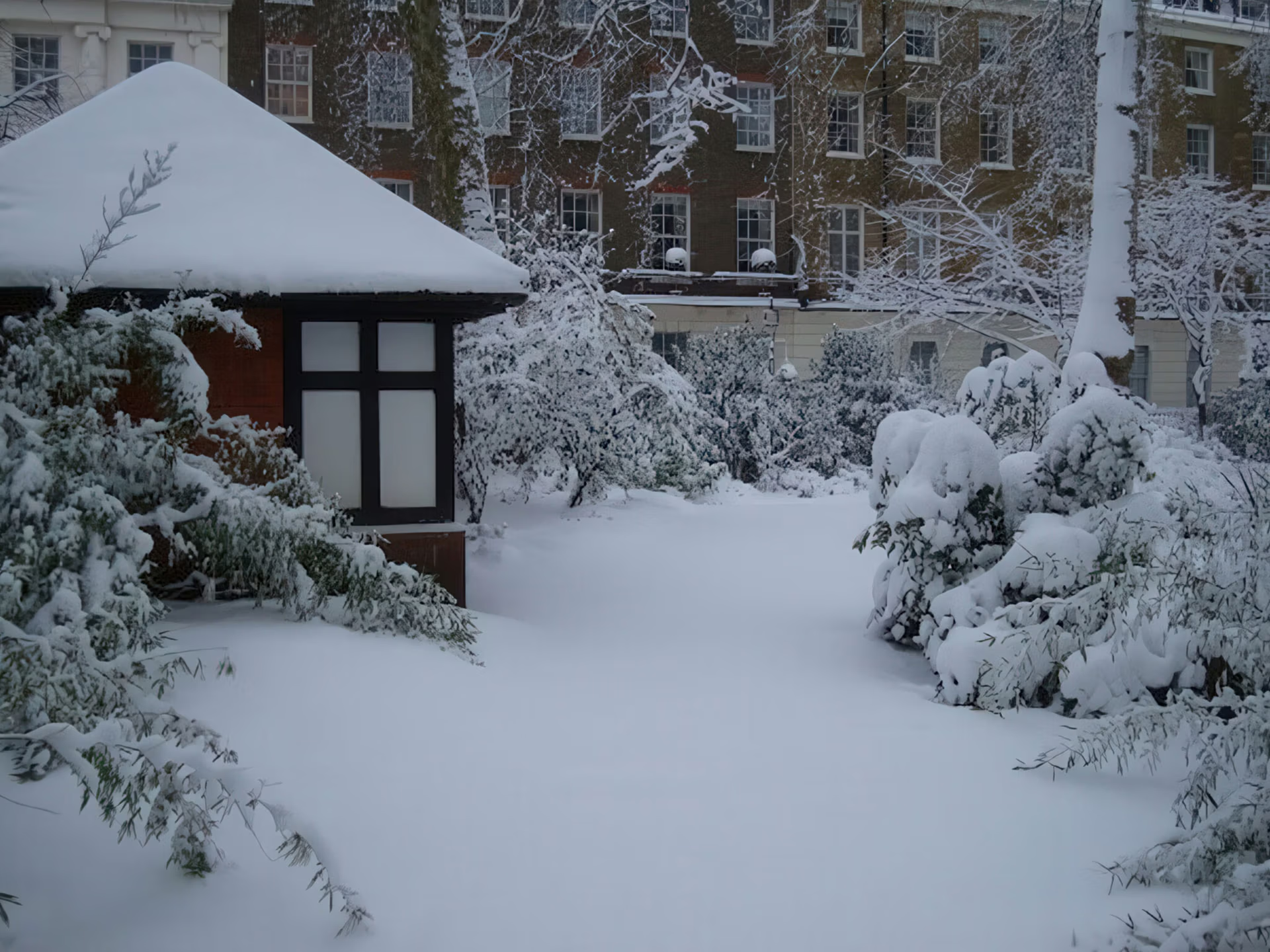
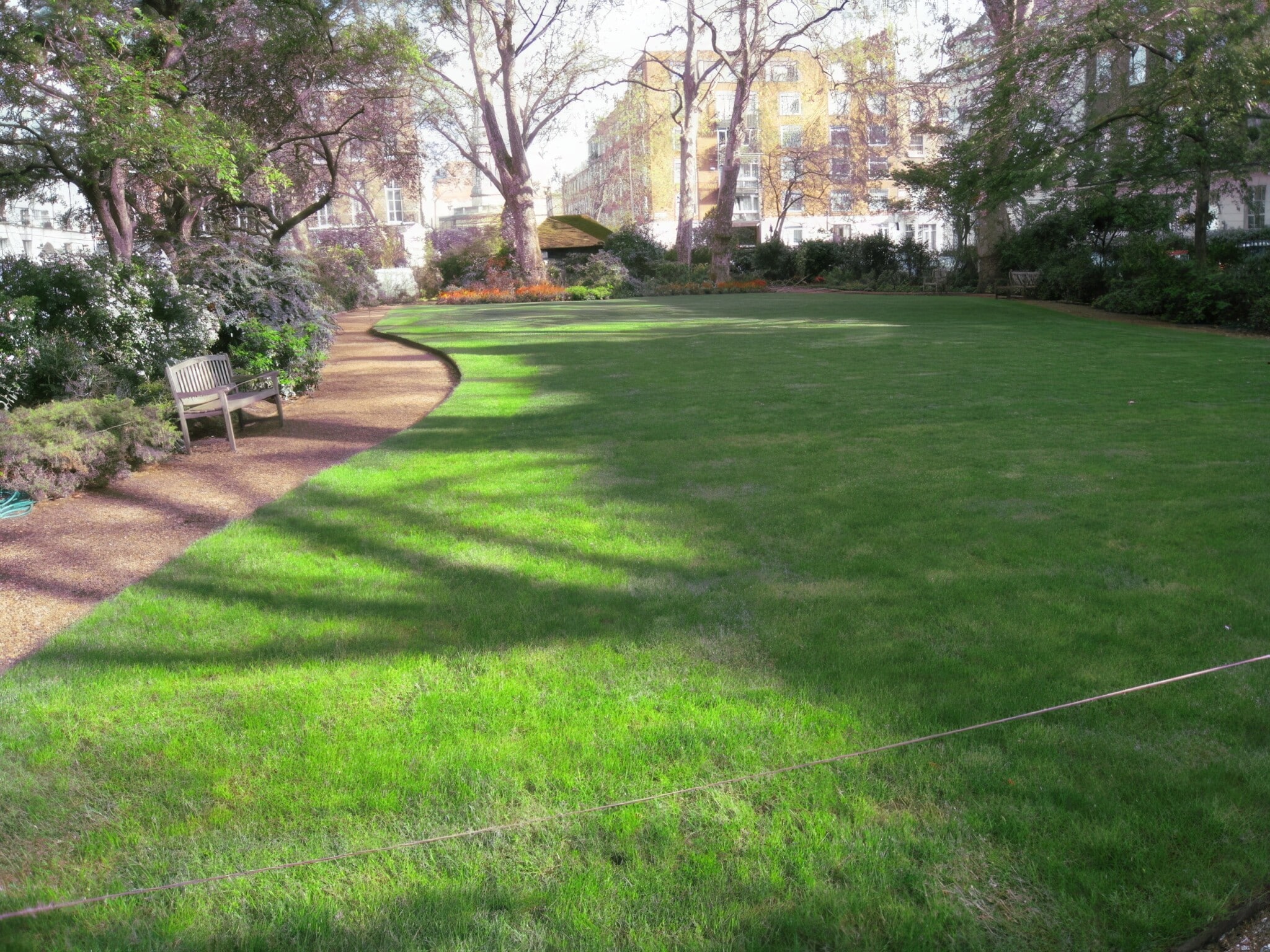
The path layout is recognisably descended from the symmetrically undulating perimeter path illustrated in Potter’s Marylebone Survey of c.1832. The circular beds edged with C19th tiles appear to be vestiges of the original elements. The perimeter is planted sporadically with shrubs and perennials, but modern gardening is agreeably low-key. The dwarf weeping ash in the middle of the lawn, which Charles Knight scorned in 1844 as resembling “a gigantic umbrella or toad-stool” has since gone. There are C19th edging tiles in places around the paths, and benches made in c.1954 from the timbers of Admiral Lord Jellicoe’s flagship. The square is railed, and contains a modest C20th timber-framed shelter; the original iron railings were removed in WWII and replaced with wire fencing, but new railings were restored in 1980.
London plane trees (a hybrid of the North American platanus and Asiatic platanus developed about 1750) are the dominant elements in the garden. There are 34 London plane trees in the garden, about a third of which survive from the last quarter of the C19th. The dominance of London plane trees in Bryanston Square Garden is not unusual, as they have been planted regularly in London gardens since the middle of C18. The oldest, in Berkeley Square, date from the 1760-1780s. Bryanston Square’s oldest planes probably date from the last third of C19, when widespread planting occurred because the London plane was seen to thrive in the polluted atmosphere of the time. An expert report in 2004 stated that the oldest known London planes (nearly 250 years) are still growing, so no one knows yet how old or how large they may become!
Despite being one of the most iconic tree species in London, the precise origins of the London plane tree remain mysterious. It is certainly the unforeseen result of two “immigrant” trees from opposite ends of the world finding themselves in the same place, thanks to the age of European exploration. Its parents — the Oriental Plane from Asia and the American Plane (or Sycamore) from across the Atlantic — may have hybridised naturally, most likely in Spain, before making their way to Britain in the 17th century. An alternative account places the tree’s discovery with John Tradescant the Younger, who first spotted it in his celebrated nursery garden and “ark” in Vauxhall, South London, in the mid-17th century.1
The London Plane went from interesting curiosity to the urban tree of choice at a pivotal moment — when London was blackened by the soot and smoke of the Industrial Revolution, and rapid population growth was forcing greater urban planning. Taking inspiration from the plane-lined boulevards of Paris, constructed from around 1850, the tree was planted en masse across the capital, thriving thanks to its remarkably hardy characteristics. Its famous bark breaks away in large flakes so that the tree can actively cleanse itself of pollutants, whilst its maple-like leaves have a sleekness that allows daily grime simply to rinse away, keeping them a lush green.2
Today, the London Plane remains the capital’s most prominent tree. According to the London Tree Report, it is one of the most important species in Inner London, making up the largest leaf area of all tree species there and bringing great benefits for air quality and shade.3
Sources:
1. https://www.treesforcities.org/resources/the-mysterious-story-of-the-london-plane-tree
2. https://londonist.com/2015/03/the-secret-history-of-the-london-plane-tree
JOHN BROOKES’ DESIGN FOR BRYANSTON SQUARE, LONDON
John Brookes MBE (1933 – 2018) was a garden designer, writer and lecturer who brought abstract and modernist principles to garden design. Beginning in the late 1950s, he designed thousands of gardens during his lifetime and generously deposited his archive of drawings to the Garden Museum in 2014. These drawings, often the only records for gardens that have since changed or disappeared, provide evidence of his design approach and vision.
Brookes espoused the concept that when designing a garden, the principal factor to consider is how its occupants will use it. While this sounds very obvious now, at the time this contrasted with the grand garden traditions which were high maintenance, expensive and for show. This concept was reflected in his influential book, Room Outside (1969), where he argues that gardens should be an extension of modern living. As with the interior of the house, Brookes proposed that the garden should be a place for people to use, not just to look out at.
An interesting project within the archive is Bryanston Square, a classic early 19th-century square in Marylebone, London. In 1964 Brookes moved to a mews nearby and was commissioned to give residents something interesting to look at from their first-floor reception rooms. Dr. Barbara Simms expertly summarises the history of the commission and analyses Brookes’ design approach in her monograph, John Brookes: Garden and Landscape Designer (Conrad Octopus, 2006).
Thinking about how the area would be used, Brookes noticed that it was popular with nannies pushing prams, so decided to create a meandering walk. The swirling geometric forms of his design, which would have been interesting when viewed from above, pay homage to his hero, the Brazilian artist and landscape designer Roberto Burle Marx.
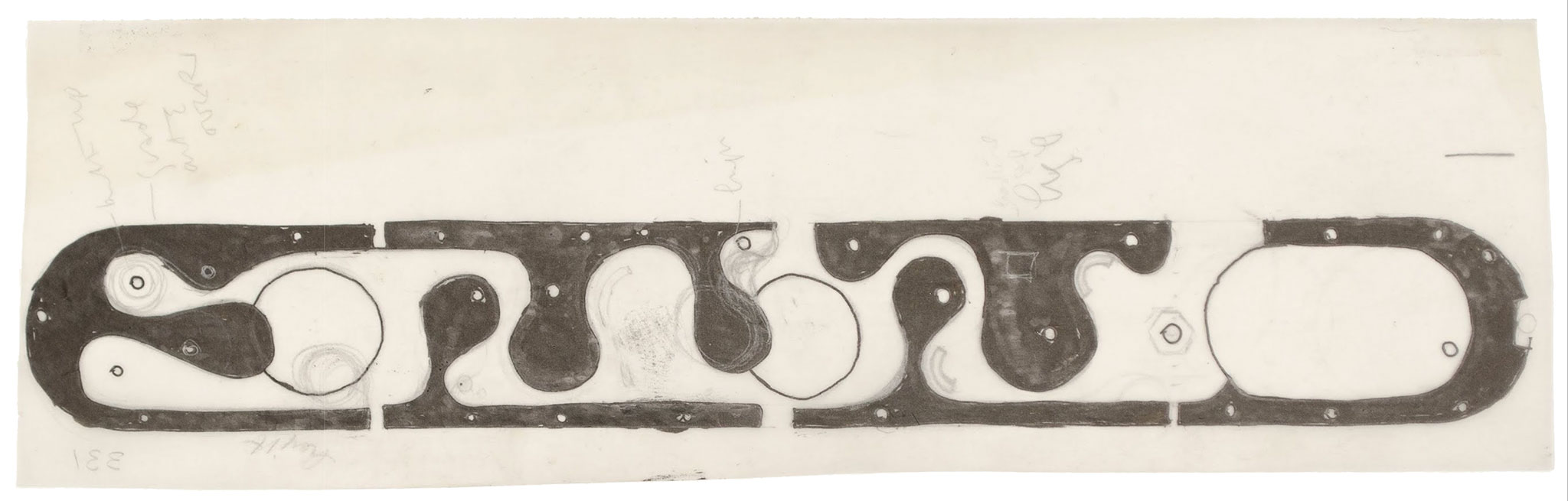
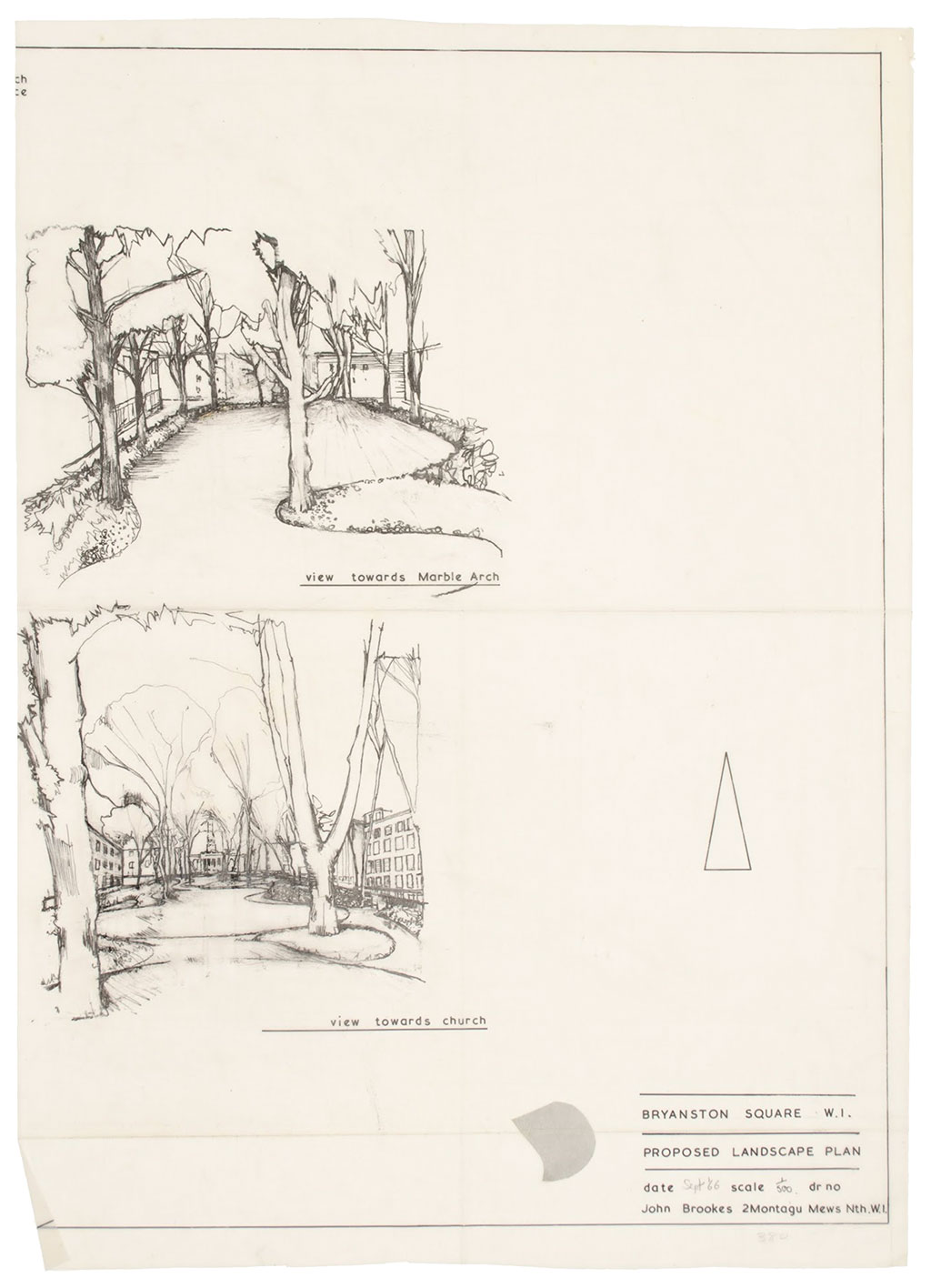
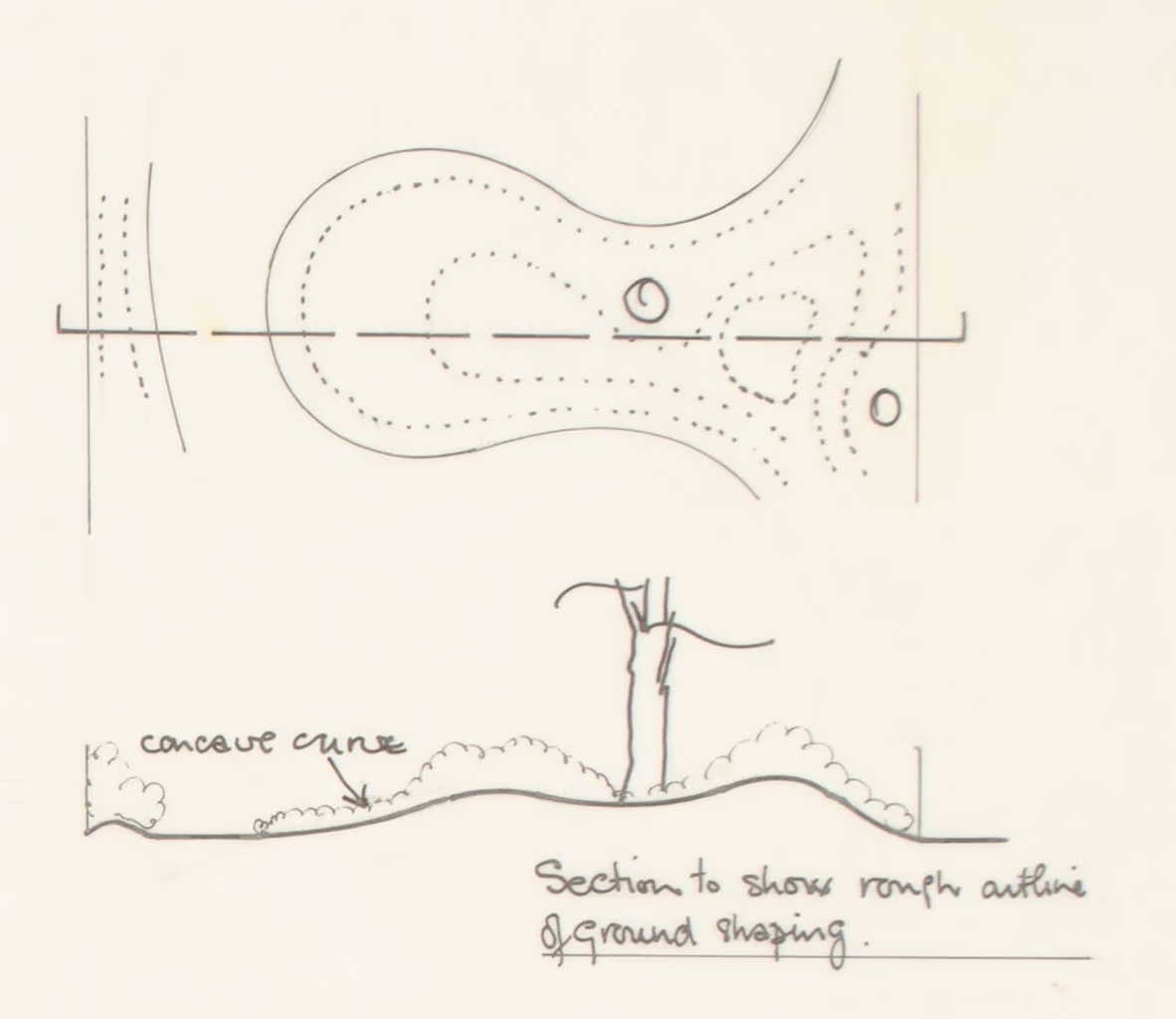
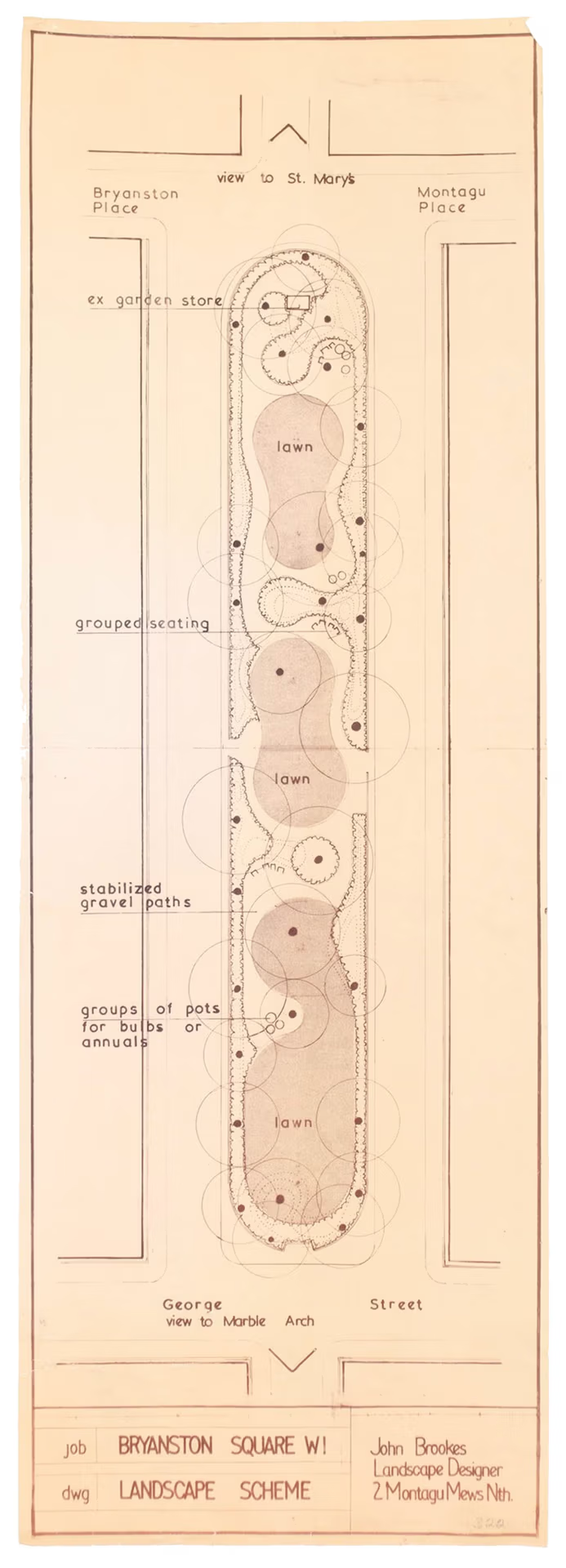
Gravel paths wind through areas of lawn and trees, with dappled sunlight shining through the leaves of the original London plane trees. Brookes’ annotations show areas reserved for grouped seating, where residents could relax and enjoy the views.
He positioned flowers at the margins due to the lack of sunlight; ‘The object of the planting was not to produce a flower garden but a green one with points of colour emphasis’, Brookes wrote.
Although the garden committee accepted Brookes’ design and it was executed as planned, sadly it no longer survives. Brookes recalled ‘I moved out of London and the next thing I heard was that they didn’t like the wiggly paths and they’d straightened them up again!’ Nevertheless, Bryanston Square was one of his first major projects. His innovative design represents a bold Modernist intervention in a traditional city space, and is perhaps his purest homage to Burle Marx. We are very glad he chose to deposit his archive at the Garden Museum where his drawings will be preserved for posterity and made accessible to researchers.
By Rosie Vizor, Archivist, Garden Museum
London Garden Squares
London Gardens Trust notes that “Squares are one of the defining features of London. Like other European cities, London has its grand civic spaces, but no other city has developed the garden square in quite the same way. London squares are different because they were built for people to live in. The layout of Georgian and Victorian squares created an ordered, spacious arrangement of streets and leafy open spaces which has made an enduring contribution to the quality of life in London.”
As specified by the London Squares Preservation Act of 1931, Bryanston Square Garden is protected as “an ornamental garden pleasure ground”. Relevant legislation and planning policies are summarised in Historic Parks and Gardens in Westminster published by the City of Westminster. An additional source of information regarding strategies, challenges, and services relevant to residential garden squares in London is Garden Square News, published twice annually with a mission to use its reporting to “enhance and defend” London’s communal gardens.
London Gardens Trust organises the annual London Open Gardens event, which offers public access over a summer weekend to over 100 secret and/or private gardens throughout London. Bryanston Square Gardens participates in London Open Gardens, with residents volunteering to welcome visitors to our Garden and share its history.
FAQs
Picnics of groups smaller than 10 persons are permitted, however BBQs and music are prohibited and care must be taken to ensure absolutely no mess is left behind.
With the exception of guide dogs for the physically impaired, absolutely no dogs are permitted in the Square.
All events must be approved by the Managing Agent and subject to a hire agreement.
Bryanston Square household rubbish collection does not fall within the remit of the Bryanston Square Garden Trust.
Rubbish should never be left in the Garden; if you bring it in, you are responsible for taking it away.
Please contact the Managing Agent. Contact details may be found at the bottom of your screen.
Foxes are a frequent presence in and around Bryanston Square. Residents are reminded to avoid approaching or disturbing foxes and their cubs, and to ensure that children in your care do the same.
The Garden’s policy is one of management (strict garden rules about food waste and rubbish, deterring foxes in certain areas of the garden, e.g., the playground), rather than investing resources in the impossible pursuit of preventing foxes altogether. We ask that residents do your part by taking all waste with you when you leave.
Urban foxes in the UK are afforded legal protection primarily through animal welfare and wildlife protection laws, which apply equally in urban environments. The Wildlife and Countryside Act 1981 prohibits the use of inhumane or indiscriminate methods of killing or capturing foxes, such as self-locking snares, poisons, or certain types of traps. This means that even in urban settings—where foxes often live in close proximity to people—residents, councils, or pest control professionals must follow strict legal guidelines if they seek to deter or remove foxes from private or public land.
Under the Animal Welfare Act 2006, it is an offence to cause unnecessary suffering to any wild mammal under human control. This includes urban foxes that are trapped or otherwise handled. Anyone interfering with foxes, especially during breeding season when cubs may be present, must take care to avoid harm. Causing injury or distress to foxes—whether deliberately or through careless pest control methods—can result in prosecution. The Act also places responsibilities on those who deal with urban foxes, including local authorities, to ensure humane treatment.
Importantly, fox dens (or earths) in urban areas may receive indirect protection during certain times of the year. Disturbing a den that contains dependent cubs, for example by blocking or destroying it, could constitute an offence under animal welfare law. While there is no specific law that outright forbids disturbing fox dens, the consequences of harming young animals or separating them from their mother could lead to legal consequences under cruelty provisions. As such, best practice when managing fox presence in urban areas is to consult with wildlife experts or licensed pest controllers who understand and follow the relevant legislation.
Garden Gallery
Historic Photos
The Library of 24 Bryanston Square, 1912.
The Ballroom of 38 Bryanston Square, 1908.
The Study of 18 Bryanston Square, 1913.